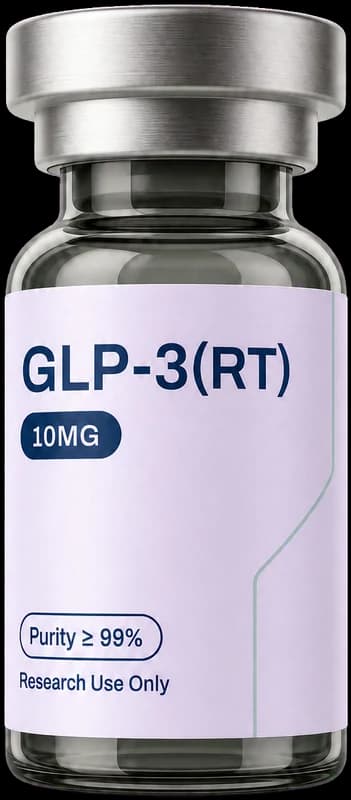
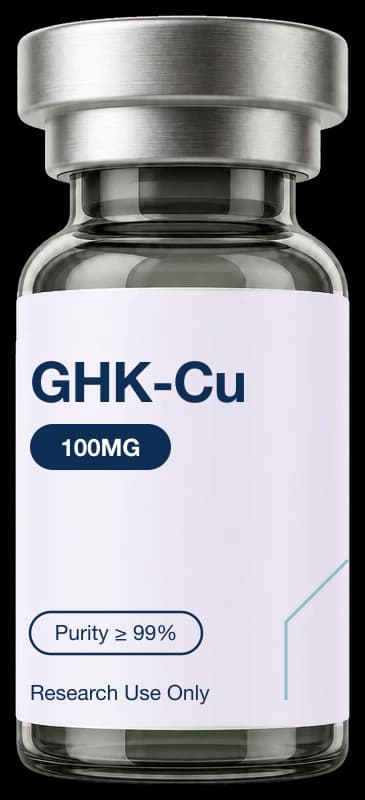
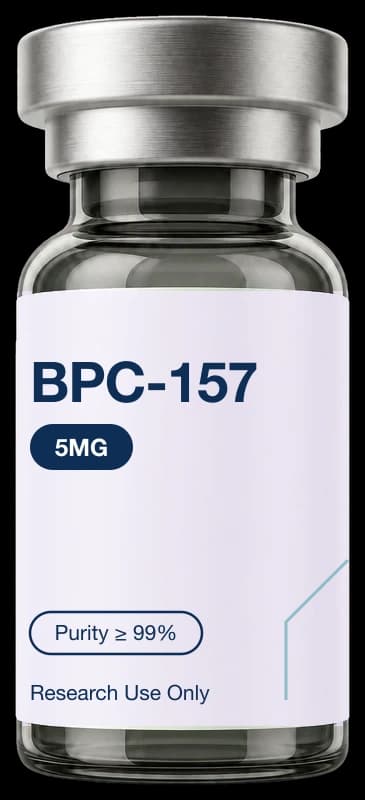
How to Not Get Scammed: Sourcing, COAs, and Spotting Fake Peptides
Here's the uncomfortable truth almost nobody tells beginners: because this market is unregulated, a real share of the "peptides" sold online end up underdosed, mislabeled, or straight-up not what the vial says. You can do everything else right and still be pouring money into a mislabeled vial of who-knows-what. This is the one skill that protects you before you ever think about anything else.
By PepQuiz · Research-framed, not medical advice · Editorial standards
The 60-second version
1/7
A COA is the receipt proving what's actually in the vial. Check it — and check the batch.
The full guide · 8 min
Why the peptide market is a minefield
Let's set the table honestly. Most of these compounds are sold as research chemicals — not FDA-approved products for the uses people are curious about. That legal gray zone means there's very little outside pressure forcing sellers to be accurate. No pharmacy-grade oversight. No one checking that the label matches the vial.
So what actually ends up in circulation?
- Underdosed vials — the label says one amount, the vial contains a fraction of it (or the peptide has degraded into something inactive).
- Wrong or mislabeled compound — you ordered one peptide and got a cheaper filler, a different peptide entirely, or a blend nobody disclosed.
- Contaminated product — bacterial endotoxins, heavy metals, or leftover solvents from sloppy synthesis.
- Just… flour, essentially — inert powder that does nothing, because the seller is banking on you never testing it.
This isn't fear-mongering. Because these are largely unregulated research chemicals, there's no outside body forcing the label to match the vial — so gaps between the two are a known risk of the gray market, not a rare accident. The takeaway isn't 'everything is fake' — it's 'you cannot assume, you have to verify.' Which is exactly what the rest of this article teaches you to do.
You cannot assume. You have to verify. That's the whole game.
What a COA actually is (and why it's your best friend)
A Certificate of Analysis (COA) is a lab report on a specific batch of product. Think of it as the receipt that proves what's actually inside the vial — not what marketing says, what the chemistry says.
The gold standard is a COA from a third-party lab — meaning an independent testing facility, not the vendor's own back room. A vendor grading their own homework is not the same thing as an outside lab with no stake in the result.
A meaningful COA is tied to a batch or lot number, so you can match the paper to the exact vial in your hand. A generic PDF with no batch number that gets slapped on every product is a decoration, not evidence.
Here's why this matters so much for beginners: you don't need a chemistry degree to demand a COA. Asking 'can I see the third-party COA for this batch?' is the single most powerful, jargon-free question you can ask any vendor — and how they respond tells you almost everything.
A COA is the receipt that proves what's inside the vial — not what marketing says, what the chemistry says.
How to actually read a COA without a chemistry degree
COAs look intimidating. They're not, once you know the five things to glance at. You're not analyzing it like a scientist — you're doing a sanity check.
1. Does the batch/lot number match your vial? If it doesn't match — or there's no number at all — the document is meaningless for your specific product.
2. Who ran the test? Look for a named, independent lab (with contact info you could actually look up). 'Tested in-house' or a blank space is a yellow-to-red flag.
3. Purity percentage. You'll usually see something like a purity result, often from HPLC (high-performance liquid chromatography — a standard method for separating and measuring what's in a sample). Higher purity generally means fewer unknown byproducts. You don't need to memorize numbers; you need to confirm the number exists and is specific.
4. Identity confirmation. Good COAs confirm the compound is actually what it claims to be, often via mass spectrometry (a method that measures molecular weight to verify identity). This is what catches 'you ordered X, you got Y.'
5. A recent date. Peptides degrade. A COA from years ago on a batch you're buying today tells you less than a fresh one.
That's it. Match the batch, check the lab is independent, confirm purity and identity are actually stated, and check the date. Five glances. If any of those are missing or fuzzy, you've learned something important.
You're not analyzing it like a scientist. You're doing a five-glance sanity check.
Red flags of a sketchy vendor
You can often spot a bad source before you ever look at a single lab report. Watch for these:
- No COA, or dodges the question. 'We're 99% pure, trust us' with nothing to back it is the biggest red flag there is. A real one shows the paper.
- Generic COAs with no batch numbers — the same PDF recycled across everything.
- Prices that are too good to be true. Real synthesis and real third-party testing cost money. Rock-bottom pricing often means someone skipped the expensive parts (like, you know, the actual peptide).
- Wild medical claims. Any seller promising a product will treat, cure, or fix something is both lying and breaking the rules everyone else follows. Legitimate sources talk about what's been documented in research, not miracle outcomes.
- Fake urgency and fake proof. Countdown timers that reset, '3 people are viewing this,' invented review counts. Manufactured pressure is a tell that the substance can't sell itself.
- No clear contact, no real address, payment-only-in-crypto-with-no-support. You want a vendor you could actually reach if a batch looks off.
- Sloppy storage/shipping. Peptides that should ship cold arriving warm with no cold pack suggests they don't respect the product — or your safety.
None of these alone is a conviction. But two or three together? Walk away. There's always another vendor; there's only one you.
Manufactured urgency is a tell that the substance can't sell itself.
Storage and handling, at a high level
This is intentionally high-level — not a how-to protocol, just the concepts a beginner should understand so you can judge whether a vendor treats product with respect.
Peptides are fragile molecules. Heat, light, and time are their enemies. That's why the whole sourcing question matters — even a perfect batch can be ruined by bad handling before it reaches you.
The general principles documented for research peptides:
- Lyophilized (freeze-dried) powder is the more stable form; the documented research handling for it is cold, dark, and controlled. If a vendor treats it casually, that tells you something.
- Peptides become more fragile the moment they leave that stable, dry form — which is why every earlier step (synthesis, testing, cold-chain shipping) is what actually protects what you receive.
- Temperature matters end to end — from the lab, through shipping, to storage. A vendor shipping temperature-sensitive product with cold packs is showing you they understand this.
I'm deliberately not giving reconstitution steps, concentrations, or anything dose-related here — that's outside the scope of a sourcing article, and honestly, if you're brand new, the responsible move is to slow down, keep learning, and talk to a qualified healthcare professional before acting. The point of this section is simpler: degradation is real, so how a product is made, tested, stored, and shipped all stack together. Quality isn't one step. It's the whole chain.
Quality isn't one step. It's the whole chain — made, tested, stored, shipped.
Why buying quality actually matters
Here's the part that ties it all together. When your source is unverified, you lose the one thing that makes any of this worthwhile: you have no idea what you're actually working with. Underdosed, degraded, or contaminated product doesn't just waste money — it makes it impossible to reason about anything honestly, and it introduces real safety unknowns you can't see or control.
That's the whole case for a lab-tested source. Not hype — logic. A batch-specific, third-party COA turns 'I hope this is real' into 'I can verify this is what it says.' That's the floor, not a luxury.
This is also why, when we point people toward the Prism Labs offer inside our stack results, one of the reasons is straightforward: run this exact checklist on them. Ask for the batch-specific, third-party COA and hold them to the same standard as anyone else — we're not telling you they're the only option or making any claim about outcomes, we're telling you what to look for. The checklist is the point, and it works on every vendor, including the ones we mention.
None of this is medical advice, and none of these compounds are FDA-approved for these uses — they're largely sold as research chemicals, so a qualified healthcare professional is the right person to talk to before you act on anything.
(Full disclosure: pepquiz.co may earn an affiliate commission if you buy through our Prism Labs link. It costs you nothing extra, and it never changes the standard we hold sources to.)
A batch-specific, third-party COA turns 'I hope this is real' into 'I can verify this is what it says.'